|
|
| Understanding Fat and Cholesterol |
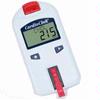 Check your cholesterol in the privacy of your home:
Click here for CardioChek - digitally monitors total cholesterol, HDL Cholesterol, Blood Ketones, Glucose and Triglycerides
|
Blood Lipid Parameters:
The National Cholesterol Education program recommends that everyone over the age of 20 be tested for cholesterol at least once every 5 years.
| Blood Lipid |
Desirable |
Borderline |
High |
Total Cholesterol |
< 200 mg/dL |
200-239 mg/dL |
>= 240 mg/dL |
Low-Density Lipoproteins (LDL) |
< 130 mg/dL |
130-159 mg/dL |
>= 160 mg/dL |
High-Density Lipoproteins (HDL)
|
> 35 mg/dL
(values >60 mg/dL are considered a negative risk factor) |
Triglycerides |
< 200 mg/dL |
The National Cholesterol Education Program
Lipids (Fats) Explained:
Fats, or lipids, can be divided into three general categories:
Triglycerides, Phospholipids and Sterols.
- Triglycerides - (fats and oils) This is
the main form of fat in the diet. Triglycerides provide us
with energy, insulates, cushions and protects internal organs
and helps our bodies use carbohydrates and proteins more efficiently.
Triglycerides can be further divided into the following categories:
- Saturated fats - Usually solid at
room temperature, saturated fats contain the maximum number
of hydrogen atoms (saturated with hydrogen). Saturated
fats are considered the most detrimental to health.
- Monounsaturated fats - Liquid at room
temperature, monounsaturated fats include olive and canola
oils. This type of fat tends to lower "bad"
LDL cholesterol while leaving the "good" HDL
cholesterol unchanged.
- Polyunsaturated fats - Liquid at room
temperature, polyunsaturated fats include corn oil, safflower
oil and sunflower oil. This type of fat tends to lower
both "bad" LDL and "good"
HDL cholesterol.
- Hydrogenated fats - This fat results
from a process where hydrogen atoms are added back to
polyunsaturated or monounsaturated fats to protect against
rancidity . This procedure effectively causes hydrogenated
fats to become saturated fats. Thus, if
a food lists partially hydrogenated oils among its first
three ingredients, it usually contains alot of trans-fatty
acids and saturated fats.
- Trans-fatty acids - In nature, most
unsaturated fats are cis-fatty acids. During
hydrogenation, the molecular structure changes from cis-
to trans-fatty acids. Trans-fatty acids increase
"bad" LDL cholesterol and lower "good"
HDL cholesterol, which may increase heart disease risk.
- Essential fatty acids - Essential
fatty acids must be supplied by the diet. The body
uses essential fatty acids to maintain the structural
parts of cell membranes. They are also used as a component
in the production of hormone-like substances (eicosanoids)
that help regulate blood pressure, clot formation, and
maintain the immune response.
- Linoleic Acid - The Omega-6
family. Common sources for these essential fatty
acids are vegetable oils and meats. Most individuals
can ensure an adequate intake of Omega-6 fatty acids
by including grains, seeds, leafy vegetables, and
small amounts of vegetable oils and meats in the diet.
- Linolenic Acid - The Omega-3
family. Linolenic acid is a major component
of the communicating membranes of the brain, and is
active in the eye's retina. It is essential
for growth and development. Fish, in
particular, is abundant in both Omega-3 and Omega-6
fatty acids.
- Phospholipids - (eg. lecithin) Phospholipids
help transport fat-soluble vitamins, hormones and other substances
through cell membranes. Because they can dissolve in
both water and fat, they act as an emulsifier, helping to
keep fats suspended in body fluids and blood. The liver
can produce all the body's phospholipids from scratch, therefore
it is not an essential nutrient.
- Sterols - Sterols include cholesterol,
vitamin D and sex hormones. The are a component of bile,
sex hormones (testosterone), adrenal hormones (cortisol) and
are a structural component of cell membranes. 9/10 of
the body's cholesterol is stored in cells.
Cholesterol - The liver manufacturers about
800-1500 mg. of cholesterol per day, which contributes much
more to total body cholesterol than does diet. The liver
can also make cholesterol from carbohydrates, proteins or
fat. Only animal foods contain cholesterol.
Excess cholesterol harms the body when it forms deposits on
artery walls, leading to atherosclerosis and heart disease.
Cholesterol can be further divided into HDLs and LDLs:
- Low-Density Lipoproteins (LDL) - Considered
"bad" cholesterol. It is produced in the
liver and circulates through the body, transporting
fat to the muscles, heart, fat stores and other tissues.
- High-Density Lipoproteins (HDL) - Considered
"good" cholesterol. It is produced by the liver
to carry cholesterol and phospholipids from the cells
back to the liver for recycling and/or excretion.
Because HDLs represent cholesterol removal from arteries
and blood to the liver for breakdown and disposal, it is
considered "good" cholesterol. Therefore,
high levels of HDL cholesterol is considered a negative
risk factor for heart disease.
Approximate Cholesterol Amounts in Foods:
Food |
mg/chol |
Grains, vegetables, fruits |
0 |
Whole Milk, 1 cup |
30-35 |
Nonfat Milk, 1 cup |
5-10 |
Cheese, 1 ounce |
25-30 |
Butter, 1 tablespoon |
10 |
Beef, chicken, or pork,
3 ounces |
70-85 |
Liver, 3 ounces |
410 |
Egg yolk |
213 |
Egg white |
0 |
Shrimp, 3 ounces |
165 |
Fish, lobster, clams,
3 ounces |
50-60 |
The table above shows the approximate amounts of cholesterol
that can be found in common foods.
Note that current research indicates that food cholesterol
does not appear to increase blood cholesterol as dramatically
as does saturated fats. So while it is wise to watch
your cholesterol intake, be sure to decrease your consumption
of saturated fats as well.
How you can improve your Cholesterol Levels
- Reduce or maintain a desirable weight
- Exercise. Aerobic exercise four days per week for 30 minutes
or more can increase the level of ("good") HDL cholesterol
in your body
- Choose monounsaturated or polyunsaturated fats in small
amounts in place of saturated fats
- Avoid saturated fats.
- Eat fish once or twice per week
- Avoid hydrogenated or trans-fatty acids
- Reduce consumption of high-cholesterol foods
- Consume more soluble fiber (see our Amazing Grains article)
- Graze. Eating 5 or more meals per day keeps insulin concentrations
low and slows down the liver's synthesis of cholesterol
Note
16.7 Million People Around the Globe Die From Heart Disease Each Year
This year, more than 32 million people across the world will suffer a heart attack or stroke, and about 12.5 million of those incidents are fatal.2 Blood cholesterol levels have a lot to do with a person�s risk of getting heart disease. In fact, the higher the blood cholesterol level, the greater the risk for developing heart disease.
Regular tracking of cholesterol and triglycerides is important for many reasons.
- Testing your numbers over time helps you make informed decisions.
- Checking your numbers gives you peace of mind. Why wait and worry?
- Tracking your levels lets you know if your heart health regimen is working.
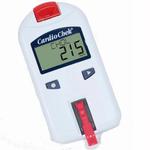
Your physician can test your cholesterol and triglycerides in the office, and you can test your levels between physician visits using the CardioChek� home cholesterol test system
Check your cholesterol in the privacy of your home:
- Click here for CardioChek
- digitally monitors total cholesterol, HDL Cholesterol, Blood Ketones, Glucose and Triglycerides
|

 Start Losing Weight Now